Lottemaa vs Linnanmäki: Which Theme Park Should Your Family Visit?
By Lottemaa Team • Updated May 22, 2026.
Every summer, thousands of Finnish, Estonian, Latvian, and Lithuanian families quietly face the same planning question: do we go to Linnanmäki again this year, or do we cross the Gulf and try Lottemaa? Both parks are excellent. Both have decades-long reputations. Both are beloved by the families who keep coming back. But they are built around fundamentally different ideas about what a family theme park should be — and depending on your kids’ ages, your energy levels, and whether you’d rather queue for roller coasters or wander through a wooden village, the right answer is different for different families. This is the honest comparison.
The 30-second answer
Before we get into the side-by-side detail, the quick version:
- Choose Linnanmäki if: your kids love roller coasters, you live in or near Helsinki, you want an urban half-day or full-day, and your children are 7 or older. Best for families who already know the rides ecosystem and want the thrill-park experience.
- Choose Lottemaa if: your kids are 3–10, you want a slow, walkable, story-driven park where every house belongs to a character, and you’re willing to drive 1h 45min south of Tallinn (or 2h 40min north of Riga). Best paired with a Pärnu spa weekend.
- Choose both in the same summer if: you can afford the time. Most families who’ve done both will tell you the parks aren’t competitors — they complement each other. One is an adrenaline trip, the other is a memory.
The parks at a glance
A factual side-by-side, drawn from each park’s published information and from independent sources:
| Dimension | Lottemaa | Linnanmäki |
| Location | Reiu, Pärnu county, Estonia (rural pine forest) | Töölö, central Helsinki (urban) |
| Park area | 17 hectares | ~5.5 hectares |
| Opened | 2013 | 1950 |
| Built around | The Lotte cartoon universe (Estonian–Latvian co-production) | Rides, especially roller coasters |
| Number of attractions | 100+ (most are story-walkthrough, gentle play) | 50+ rides including 8 roller coasters |
| Best age range | 3–10 | 7+ (younger kids access many but not all rides) |
| Pricing model | One ticket includes everything | Free admission + pay per ride or buy a wristband |
| Owned by | Private company | Lasten Päivän Säätiö (children’s day foundation, charity-run) |
| Google reviews | 2,600+ at 4.7★ | 28,000+ at 4.5★ |
| Seasons | Summer (mid-June to end of August) + December | May to October + Halloween Karnevaali |
Linnanmäki has more raw scale of reputation (75 years versus 13), about 10× the review volume, and the urban convenience of being in central Helsinki. Lottemaa has roughly 3× the physical area, a slightly higher average rating, and a fundamentally different format. Neither park is “better” — they’re built for different days out.
The most important difference: rides versus story
If you take one thing from this comparison, take this. Linnanmäki is an amusement park in the traditional sense — its identity is built around its rides. Taiga (the headline launched coaster), Ukko, the wooden Vuoristorata from 1951, the Sky Wheel, the Eclipse — these are what families remember and talk about afterwards. The day is structured around queueing for and riding things.
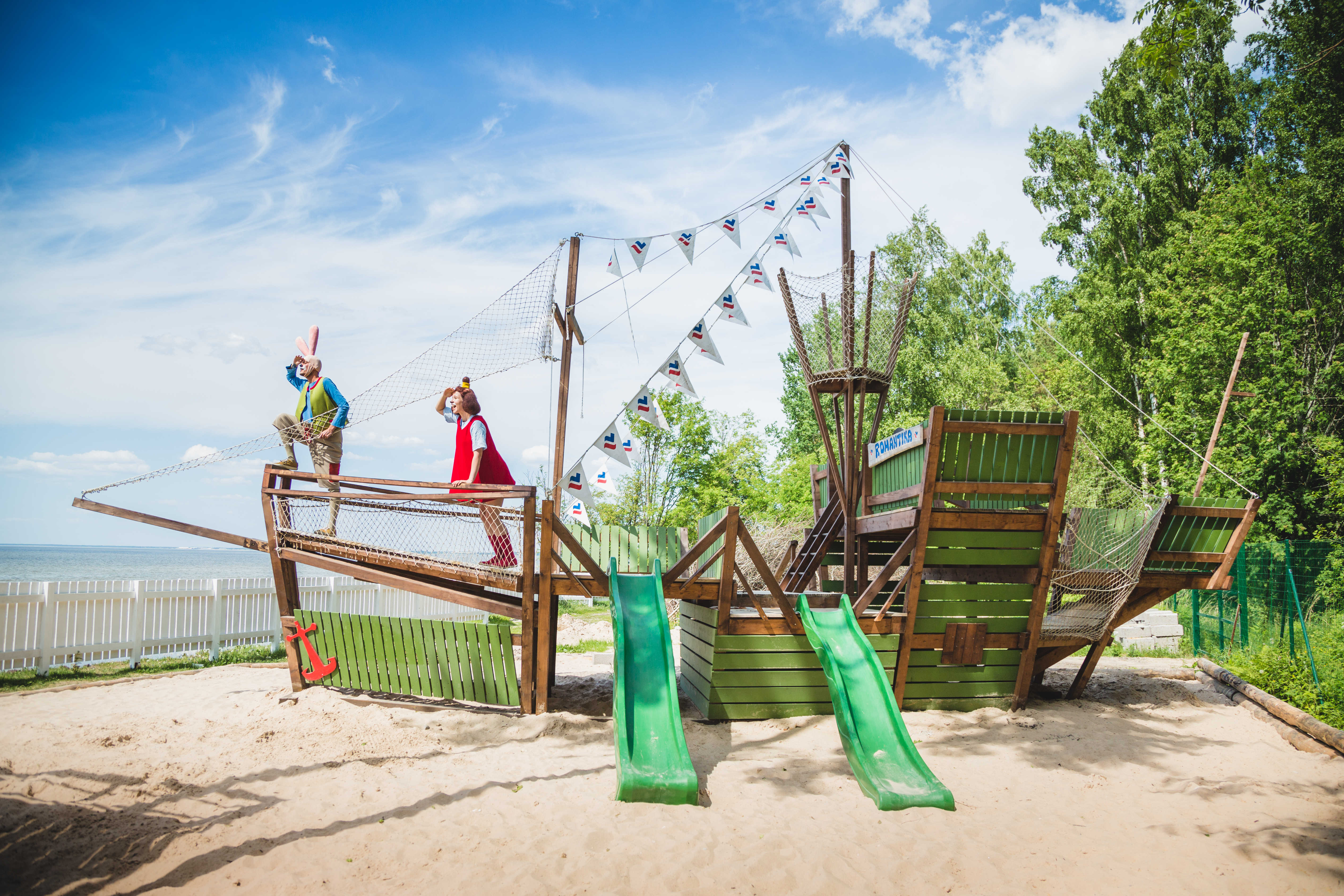
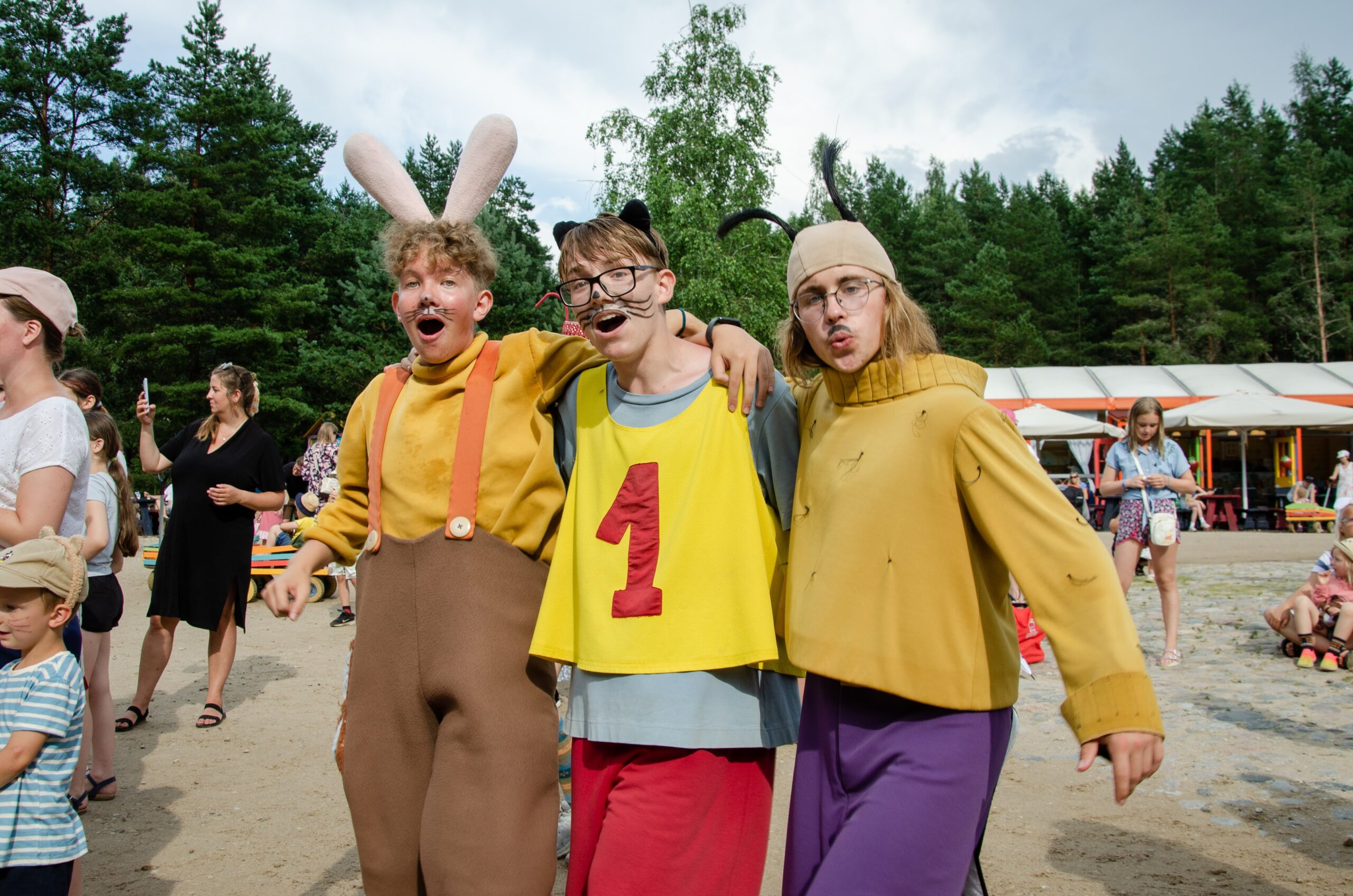
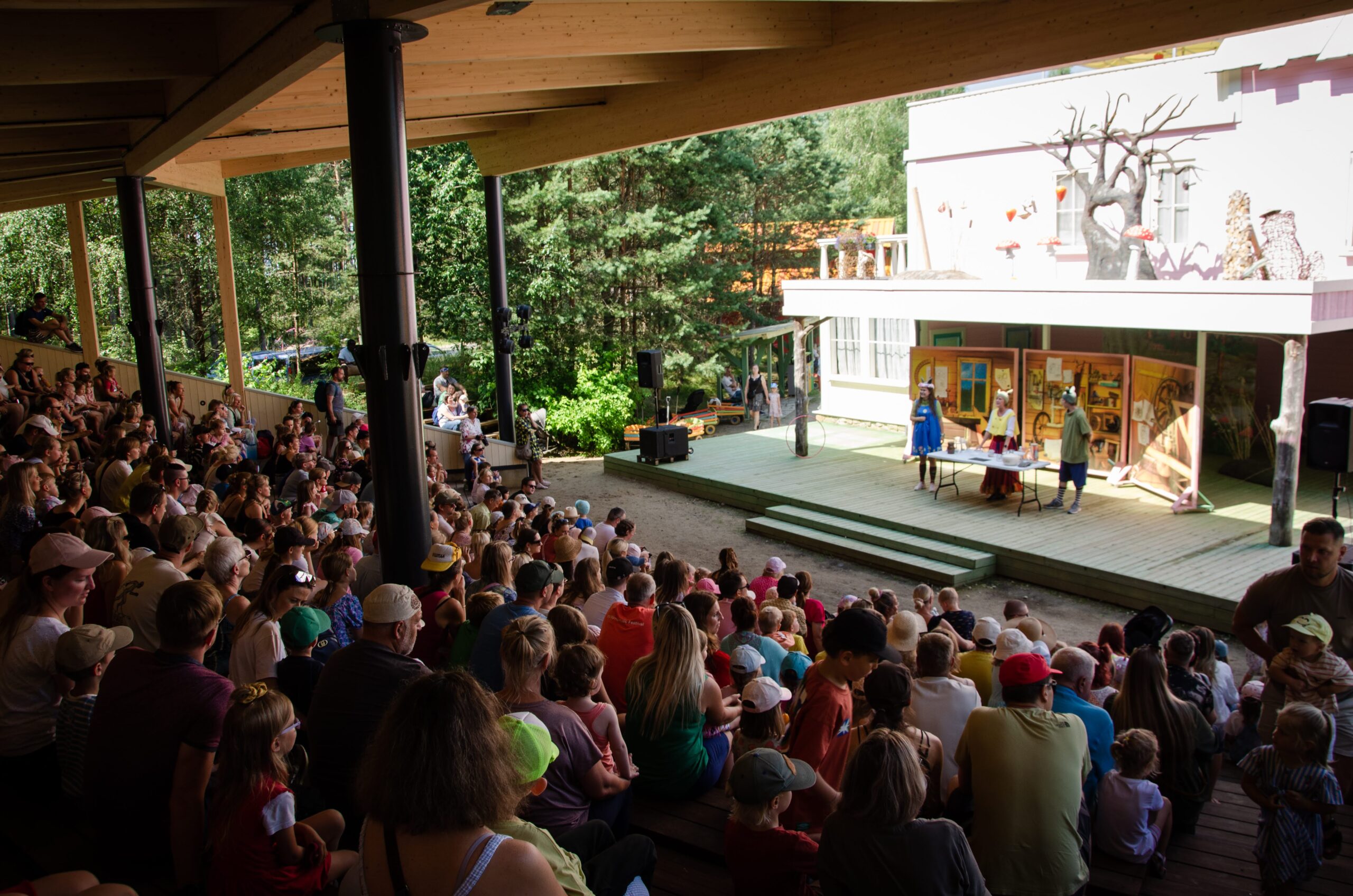
Lottemaa is a theme park in the European wooden-village tradition. Its identity is built around its characters — Lotte the inventor-dog, Bruno the rabbit, Klaus the inventor, Susumu the turtle, the fox brothers — and the village they live in. Every brightly painted house belongs to someone from the films. Costumed actors actually roam and interact with kids. The day is structured around walking, meeting, and watching: four daily theatre shows, character meet-and-greets, the planetarium, the maze.
This means the parks reward fundamentally different kinds of children. Linnanmäki rewards kids who love motion, height, speed, and queueing for the next thrill. Lottemaa rewards kids who love stories, characters they recognise, and the satisfaction of walking through a real version of a world they’ve watched on screen. Both kinds of children exist. Often in the same family.
Pricing models: all-inclusive vs free admission
This is the second most important difference, and it surprises Finnish families who try Lottemaa for the first time. Linnanmäki has a free-admission model: the park is a public Helsinki space, run by a charity that supports children’s welfare, and you only pay if you ride. You can wander in, eat ice cream, watch other people on the rides, and leave. To ride, you either pay per attraction (around 8–10 € each) or buy a Päiväranneke (day wristband, typically 47–53 € per person) that gives you unlimited rides.
Lottemaa has a one-ticket-covers-everything model. A standard ticket is €28 (or €41 for the more popular two-day ticket), and that covers every attraction inside the gates — every character house, every theatre show, every playground, the planetarium, the adventure park, the beach, the maze. The only things you pay extra for are food, drinks, souvenirs, parking (€4), and the little in-park train (€2 per direction).
Which model is better depends on your family. Linnanmäki’s model is great if you want a half-day flexible visit and your kids are too young for the wristband to be worth it. Lottemaa’s model is great if you want a relaxed full day without thinking about per-ride costs.
For which age range does each park work best?
Linnanmäki’s height-restriction wristband approach means children under 120 cm have access to only about a third of the rides. From 7–8 years upward, kids unlock the full park experience. For teenagers, Linnanmäki shines — Taiga and the bigger coasters are genuine destinations.
Lottemaa is built explicitly for ages 3–10. There are no height restrictions because there are no large rides. The story-walkthrough format means a two-year-old and an eight-year-old can both have an excellent day in the same space, in the same way. Above age 11 or so, the park’s gentleness becomes less compelling unless the older kids are there for younger siblings.
If your family includes both a 4-year-old and a 12-year-old, Linnanmäki will work better for the 12-year-old and barely register for the 4-year-old. Lottemaa will delight the 4-year-old and leave the 12-year-old slightly bored. This is one of those genuine cases where the right answer is to do both parks in the same summer at different times.

Cost comparison for a family of four
A rough budget comparison for a family of two adults and two children, for one full day at each park:
| Item | Lottemaa | Linnanmäki |
| Park entry / wristbands | €112 (4× €28 standard tickets) | €188–212 (4× day wristbands at €47–53) |
| Parking | €4 | €10–15 (street parking, central Helsinki rates) |
| Food (4 people) | €40–60 | €50–80 |
| Total day | ~€160–180 | ~€250–310 |
Lottemaa works out notably cheaper per family-day, especially with the €41 two-day ticket which only modestly increases the cost from a single day. Linnanmäki adds up faster than most first-time visiting families expect — the wristband economics genuinely matter.
Travel logistics
Linnanmäki sits in central Helsinki, in the Töölö district, walkable from many central hotels and reachable by tram or metro. For Helsinki residents and Helsinki visitors, this is unbeatable convenience.
Lottemaa requires a journey. From Tallinn it’s a 1h 45min drive south on the Via Baltica. From Helsinki it’s a 5-hour total trip (2-hour ferry plus the drive). From Riga it’s 2h 40min north. From a logistics standpoint, Linnanmäki wins by a clear margin — there is no journey to plan; the park is in the city. But Lottemaa’s journey is also part of the appeal: it pairs naturally with a Pärnu spa-hotel weekend, which is a different kind of family holiday.
If you’re starting from Helsinki and considering Lottemaa, our Helsinki-to-Lottemaa guide walks through ferry options, drive times, and Pärnu spa hotel recommendations.
Atmosphere
Linnanmäki at its busiest is loud, vibrant, sometimes crowded, definitely electric. Heavy metal soundtrack on the coasters. Carnival lights. The smell of hot dogs and candy floss. It’s an event. Many families love this and come back specifically for it. Some parents find the volume tiring by mid-afternoon.
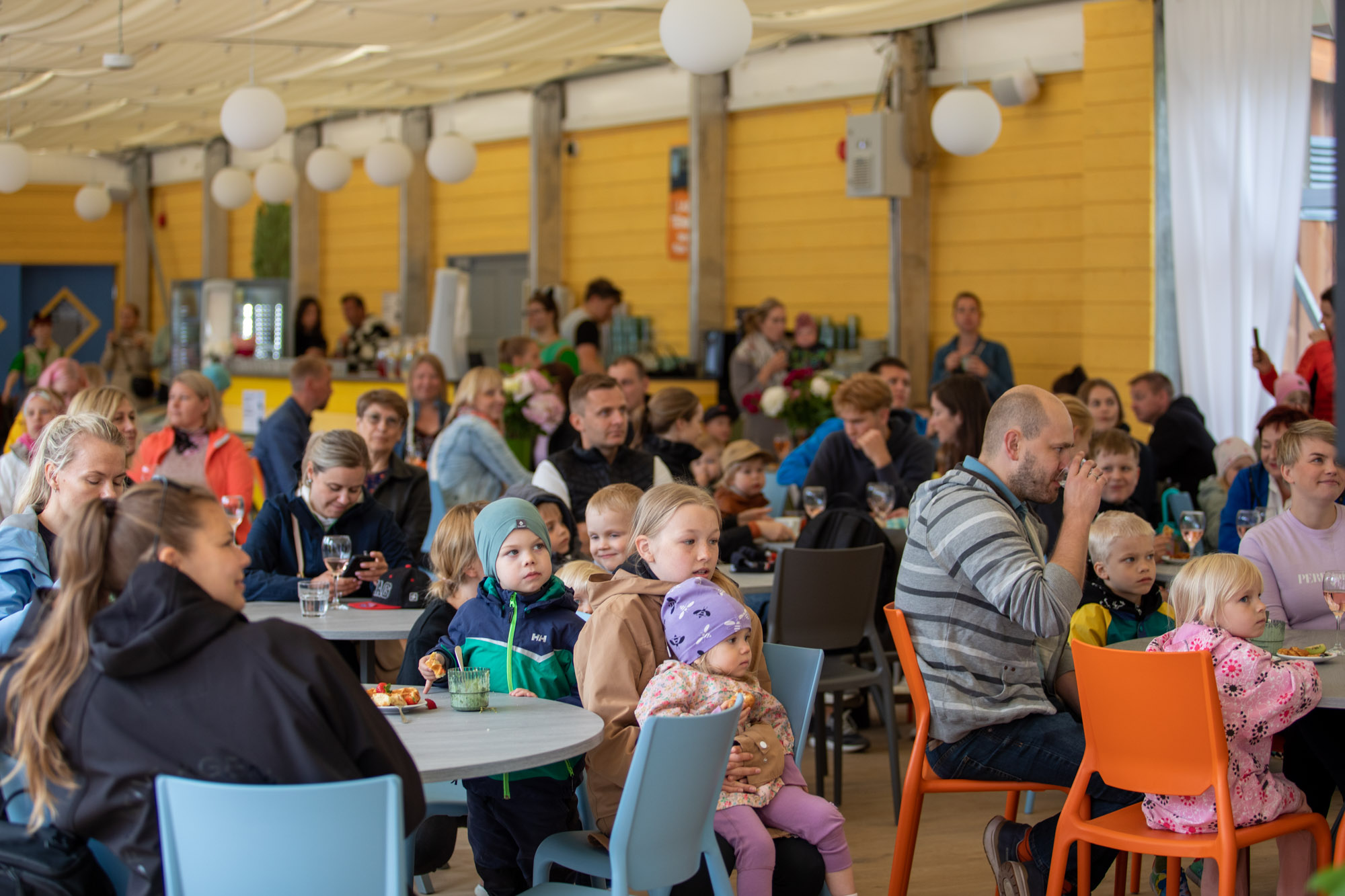
Lottemaa at its busiest is calm. Tucked into a Pärnu pine forest, the loudest moments are the daily theatre shows and the occasional small child losing it because Lotte just walked past. The pace is walking, not queueing. The smell is pine. Parents notice their own shoulders dropping by mid-morning. Some families find this gentle pace less stimulating than they expected — Lottemaa is genuinely not for everyone who’s looking for adrenaline.
Could you do both in one summer?
Yes, and many families do. The simplest pattern: Linnanmäki in early or late summer as a half-day Helsinki visit, Lottemaa as a long weekend in July with the Pärnu spa hotel built in. Or the reverse — Lottemaa in June when the Estonian park is quieter, Linnanmäki in August during the Karnevaali season.
For Finnish families with kids 4–10, the combination gives you both formats in one summer: one adrenaline-driven Helsinki day and one slow, story-driven Pärnu weekend. Most parents who’ve done both will tell you the kids’ memories of each are completely different — and both worth having.
So which should you choose this summer?
If your children are 7+, you live in Helsinki, and you want an exciting urban day with rides — Linnanmäki. If your children are 3–10, you want a calm story-driven experience paired with a spa weekend, and you’re willing to travel — Lottemaa. If you have time and budget for both — do both. The summer you spend choosing between them is the summer your kids will remember.
Frequently Asked Questions
Is Lottemaa bigger than Linnanmäki? Yes, roughly three times larger by area (17 hectares vs ~5.5). But size in theme parks isn’t always quality — Linnanmäki packs more ride density per hectare; Lottemaa has more walkable space and a calmer rhythm.
Is Lottemaa cheaper than Linnanmäki? For a family of four spending a full day, Lottemaa is notably cheaper (~€160 vs ~€250+ at Linnanmäki with wristbands). Travel costs from Helsinki shift this — if you’re coming from Helsinki, the ferry and accommodation bring the total much higher.
Which park is better for very young children (2–4)? Lottemaa, by a clear margin. Linnanmäki’s height restrictions mean a 2-year-old has access to a small subset of rides. Lottemaa’s whole format is built for this age.
Which park is better for teenagers? Linnanmäki. Taiga and the bigger coasters are real destinations for 12+ year-olds.
Can a family of mixed ages enjoy both? Yes, but be honest: a 4-year-old won’t enjoy Linnanmäki the same way as their 12-year-old sibling, and vice versa at Lottemaa. The mixed-age solution is doing both at different points in the summer.
Is Lottemaa related to Linnanmäki in any way? No, they are entirely separate operations. Lottemaa is privately owned in Estonia; Linnanmäki is run by Lasten Päivän Säätiö, a Finnish children’s welfare charity.
Plan your Lottemaa visit: [See 2026 opening dates and buy tickets →]
Author: Lottemaa Team, Content & Family Travel Editor at Lottemaa (Lotte Village Theme Park).
Lottemaa Team writes practical planning guides for visiting Lottemaa and the Pärnu region with children, covering seasonal opening dates, ticket inclusions, accessibility, and transport logistics from Tallinn, Riga, and Helsinki. This guide was last updated on