Midsummer at Lottemaa: How Estonia’s Most Magical Week Lands on a Family Theme Park
By Lottemaa Team • Updated May 22, 2026.
If you’ve heard of Swedish midsommar or Finnish juhannus but didn’t know Estonia has its own version, you’re not alone — most international visitors arrive at Lottemaa in late June and discover Jaanipäev by accident, slightly stunned that the entire country has gone wreath-wearing, bonfire-lighting, all-night-celebrating in unison. In Estonia, Jaanipäev — Midsummer’s Day — falls on June 24 and the celebrations run roughly June 21 through June 28. It is the single most important cultural week of the Estonian calendar, bigger than Christmas in cultural weight, and at Lottemaa it turns the park into something genuinely different from any other week of the year. This is the guide for visiting families: what Jaanipäev is, how Lottemaa weaves it into the family-friendly experience, why this week pairs perfectly with the two-day ticket, and how to make sure your kids actually understand what they’re seeing.
What is Jaanipäev, in two minutes
Jaanipäev is Estonia’s midsummer festival, celebrated annually on June 24 with the main festivities beginning on the evening of June 23 (Jaaniõhtu — Midsummer Eve). The roots are pre-Christian solstice celebrations that were later folded into the St John’s Day Christian calendar, and the modern version blends both: bonfires, wreath-making from wild flowers, traditional songs, jumping over the bonfire for luck, and staying up to watch the never-fully-setting June sun. In rural Estonia — and Lottemaa sits in deep rural Pärnu pinewoods — Jaanipäev is the year’s social and cultural anchor.
The shared Nordic-Baltic context: in Finland the equivalent is Juhannus, in Latvia it’s Līgo (June 23) and Jāņi (June 24), in Sweden it’s Midsommar. The traditions are cousins, not twins — different songs, different food, different specific rituals, but the same solstice origin. A Latvian family at Lottemaa during Jaanipäev will recognise the shape of the celebration immediately; a Finnish family will see clear Juhannus parallels; an English-speaking family will encounter something genuinely new.
The Jaanipäev week at Lottemaa: what happens, day by day
Lottemaa’s Jaanipäev programme typically runs the full week of June 21–28, with the heaviest concentration around June 23–24. Specific 2026 timings are published on the official site closer to the date — what follows is the typical shape of the week:
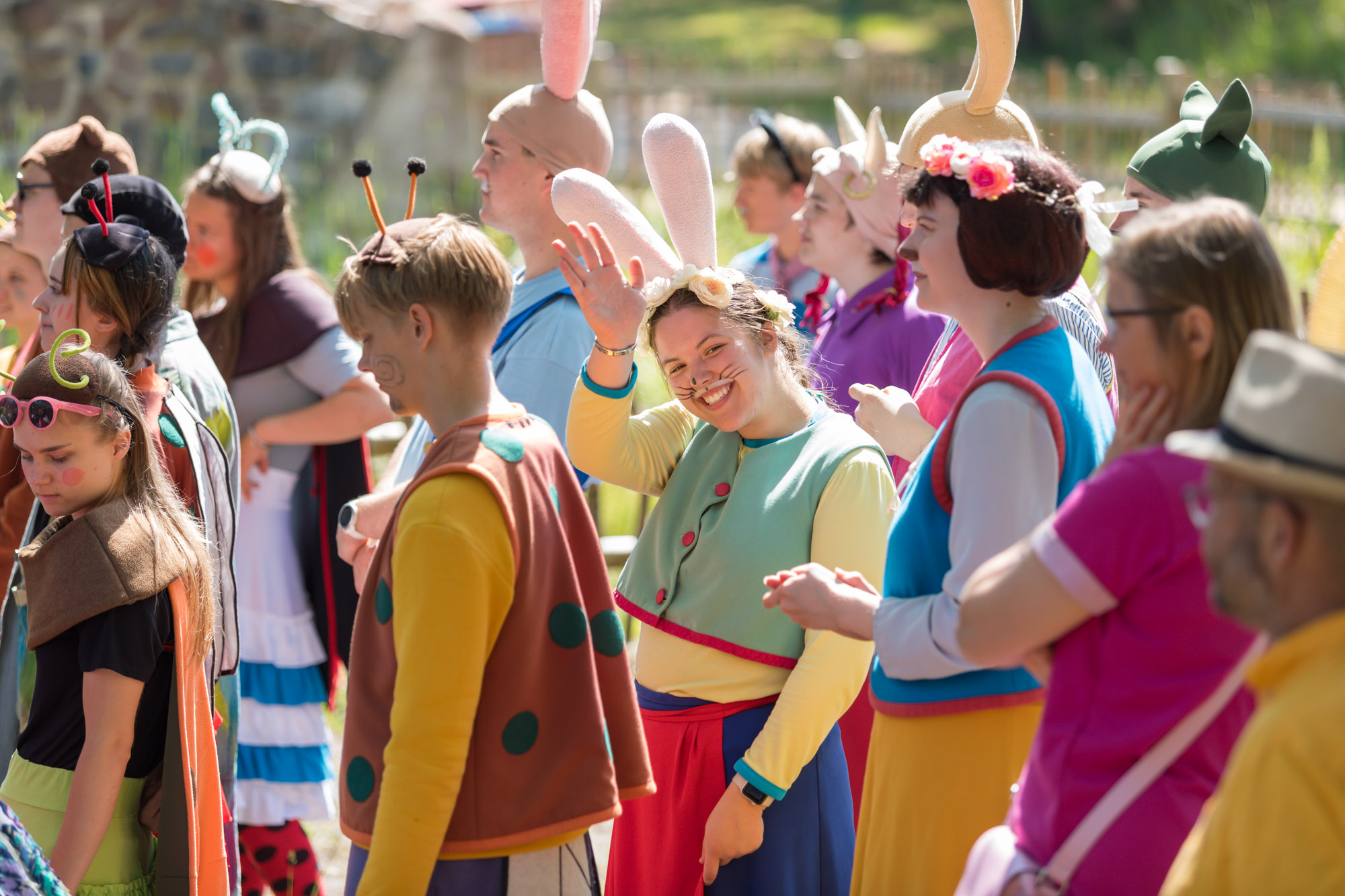
June 21–22 (warm-up days): Wreath-making workshops in the inventors’ village, traditional Estonian folk songs for kids in the open-air theatre, midsummer-themed character interactions throughout the day. The park feels normal but with an extra cultural layer.
June 23 — Jaaniõhtu (Midsummer Eve): The hero day. Special extended opening hours, the year’s premiere of Lotte’s Midsummer show, a children-safe traditional bonfire ceremony in the late afternoon, and the chance for kids to wear flower wreaths home. Traditional Estonian foods — black bread, smoked cheese, midsummer specialities — appear in the restaurant.
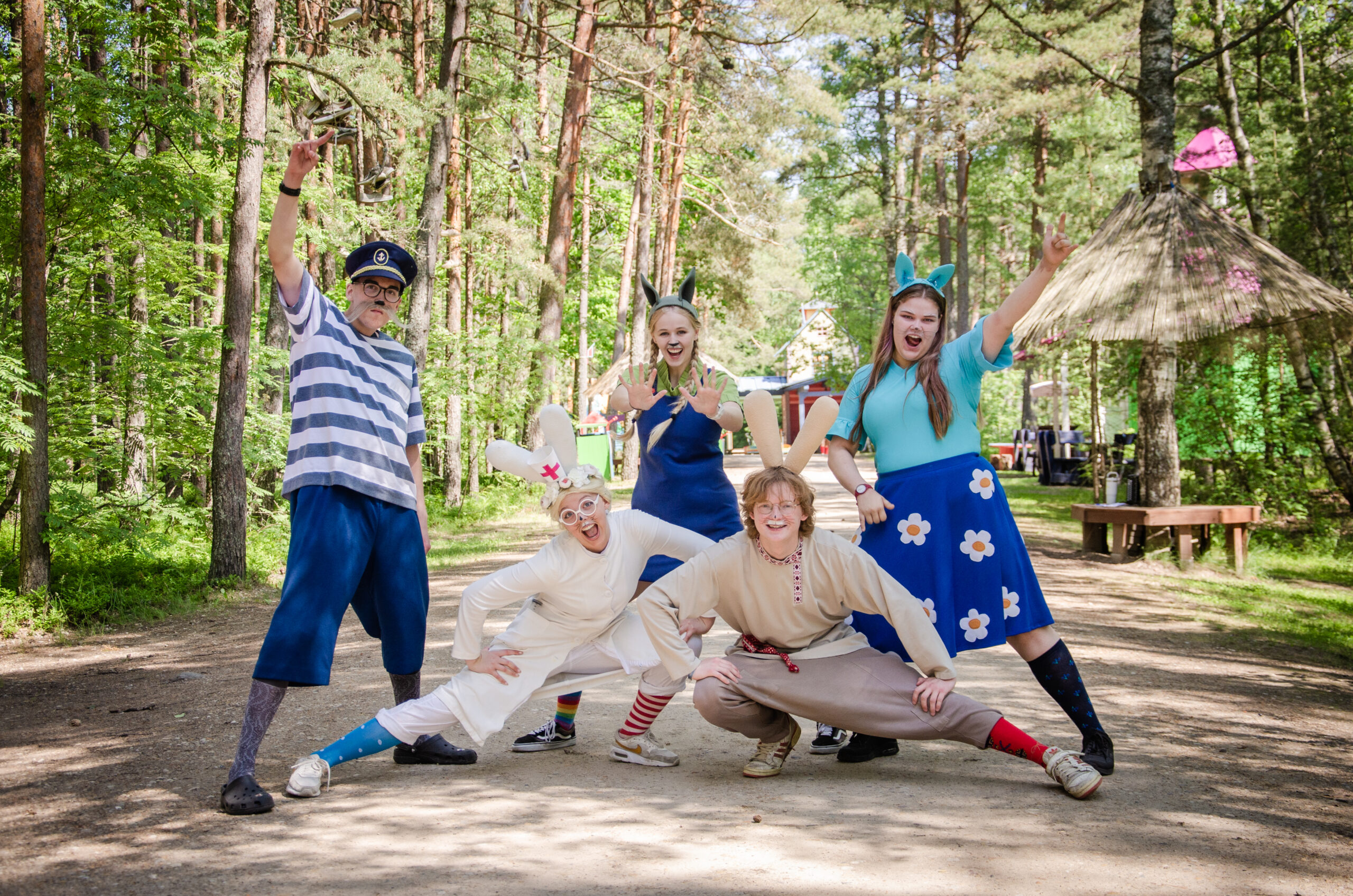
June 24 — Jaanipäev (the public holiday itself): The whole of Estonia is on holiday, families travel, the park is busy and joyful. The day is structured for cross-cultural fun: songs in Estonian translated into English / Russian / Latvian / Finnish by hosts, character meet-and-greets in midsummer dress, wreath-making continues, and the day stretches long because the sun doesn’t really set until close to midnight in this part of Estonia.
June 25–28 (afterglow): Continued midsummer theming, slightly quieter than the 23–24 peak, with the show still running and the wreath-making still open. Excellent days for families who want the cultural week without the Jaanipäev-day crowds.
Why midsummer week is the single best week to visit (with caveats)
Three honest reasons it’s the best week:
- The cultural depth is real, not performative. Lottemaa doesn’t fake Jaanipäev with one tablecloth and a brochure. The wreath-making is the actual wreath-making Estonian kids do at home. The songs are real folk songs the team learned as children. The bonfire ceremony is a scaled, child-safe version of the bonfire your local Pärnu neighbour will light that same evening.
- The light is the show. In late June at Lottemaa’s latitude (58.3°N), sunset is at 22:54 and full darkness never quite arrives. The park stays usable until late evening in a way it doesn’t in any other week. A 6pm visit in late June still has four hours of light. Your kids will remember the evening glow on the wooden houses for years.
- The two-day ticket finally makes total sense. Most weeks the two-day ticket is a “we’ll appreciate the extra time” decision. Jaanipäev week it’s “we’d be sad to miss the next day.” Day one for the standard park experience plus the cultural workshops; day two for the show and the bonfire ceremony.
And three honest caveats:
- It’s the busiest week of the year. Book accommodation in Pärnu by April for a late-June visit; everything fills.
- The bonfire ceremony is timed for safety, not late-night atmosphere. The park’s bonfire happens late afternoon while it’s still bright. If you want the proper after-dark midsummer bonfire experience, the public Pärnu beach bonfires later that evening are the place — Lottemaa during the day, beach after.
- Some kids find the cultural intensity surprising. If your child is shy in unfamiliar rituals, ease them in via the wreath-making (which is gentle and tactile) before the songs or the ceremony.
For families travelling from outside Estonia
From Tallinn: Standard 1h 45min drive south. Jaanipäev makes Tallinn quieter and Pärnu busier; the road is normal but the parking at Lottemaa fills earlier than usual — aim to arrive by 10am.
From Helsinki via Tallink ferry: Combine the ferry trip with a 2- or 3-night Pärnu spa weekend. The shared Juhannus / Jaanipäev calendar means you can leave Finnish midsummer behind and join Estonian midsummer mid-week — same solstice, different traditions, same long light. Many Helsinki families use Jaanipäev specifically as the “Finnish juhannus is too quiet because everyone’s at the cottage” alternative.
From Riga and across Latvia: Latvian Līgo is the cousin festival. If your kids know what Jāņi looks like in a Latvian setting, Jaanipäev at Lottemaa will feel familiar and slightly foreign at the same time — exactly the right cross-border cultural angle for a family weekend. The 2h 40min drive from Riga is manageable for the trip up; many Latvian families do their own Līgo on June 23 evening at home and drive to Lottemaa June 24 for the Jaanipäev day itself.
What to wear, eat, and pack for Jaanipäev week
Wear: Light layers — late June in Pärnu can swing from 18°C morning to 25°C afternoon to 14°C late evening. Comfortable shoes. If your kids own anything white linen-ish, midsummer is the cultural moment for it. Flower wreaths are made on site and can be worn home.
Eat: Traditional Estonian midsummer plates appear on the restaurant menu — black bread, smoked cheese, smoked fish, fresh dill potatoes, cucumber salad with sour cream, strawberry desserts. For kids, the restaurant keeps the regular menu running alongside, so picky eaters are fine.
Pack: The standard Lottemaa packing list (see our complete packing guide) plus a light evening jacket per person, mosquito repellent for the late-evening pinewoods (yes, the bugs join the celebration), and a phone charger because you’ll take a lot of pictures.
The kid-friendly explanation of Jaanipäev — for parents to use
If your kids are old enough to ask why everyone is making wreaths and lighting fires:
“It’s the longest day of the year. The sun barely goes down. People in Estonia have been celebrating this for thousands of years — they make crowns of flowers because the summer is short and beautiful, they light fires because the day is so important the night should be bright too, and they sing because it’s the kind of evening you want to remember.”
That sentence works in Estonian, English, Russian, Latvian and Finnish — the explanation is the same; only the language changes.
If you can’t make Jaanipäev week itself
If late June isn’t possible for you, two alternatives keep some of the cultural depth without the headline week:
- Early July — the immediate post-Jaanipäev weeks still carry midsummer decoration and quieter wreath-making remains, plus the park is calmer than the peak.
- August “Jaaniõhtu echo” weekends — Lottemaa occasionally schedules late-summer evenings that lean into the midsummer feel without being Jaanipäev itself. Check the events calendar.
Frequently Asked Questions
What is Jaanipäev? Estonia’s midsummer festival, celebrated annually on June 24 with the main festivities beginning the evening of June 23. The roots are pre-Christian solstice celebrations folded into the Christian St John’s Day calendar.
When is Jaanipäev 2026? Tuesday, June 23 (Jaaniõhtu — Midsummer Eve) and Wednesday, June 24 (Jaanipäev itself). The Lottemaa Jaanipäev programme typically runs June 21–28.
Is Lottemaa open on Jaanipäev? Yes — and with extended hours and special programming. Jaanipäev is one of the biggest days of the Lottemaa season.
What’s the difference between Jaanipäev, Juhannus, Līgo, and Midsommar? Different national versions of the same Northern European solstice festival. Jaanipäev is Estonian, Juhannus is Finnish, Līgo / Jāņi is Latvian, Midsommar is Swedish. Same root, different songs, food, and specific rituals.
Is the Lottemaa bonfire safe for small children? Yes — the park’s bonfire ceremony is scaled and supervised for family safety, with a viewing perimeter and trained staff. It happens in the late afternoon while it’s still bright, not late at night.
Will my non-Estonian kids enjoy it? Yes. Wreath-making is universal-fun. The songs are translated in real time by multilingual hosts. The character meet-and-greets are dressed for midsummer and explain the symbols in the language you ask in.
How busy is the park during Jaanipäev week? It’s the busiest week of the season. Book Pärnu accommodation by April. Arrive at the park by 10am to find good parking. Buy tickets online in advance.
Can I attend a “real” Estonian Jaanipäev bonfire after visiting Lottemaa? Yes — Pärnu beach hosts public bonfires on the evening of June 23 that are open to visitors. Lottemaa during the day, Pärnu beach in the late evening, is the standard cross-cultural midsummer rhythm for visiting families.
Plan your midsummer visit: [See 2026 opening dates and buy tickets →]
Author: Lottemaa Team, Content & Family Travel Editor at Lottemaa (Lotte Village Theme Park).
The Lottemaa Team writes practical planning guides for visiting Lottemaa and the Pärnu region with children — tickets, transport, accessibility, packing, seasonal planning. This Jaanipäev guide was last updated for the 2026 season on